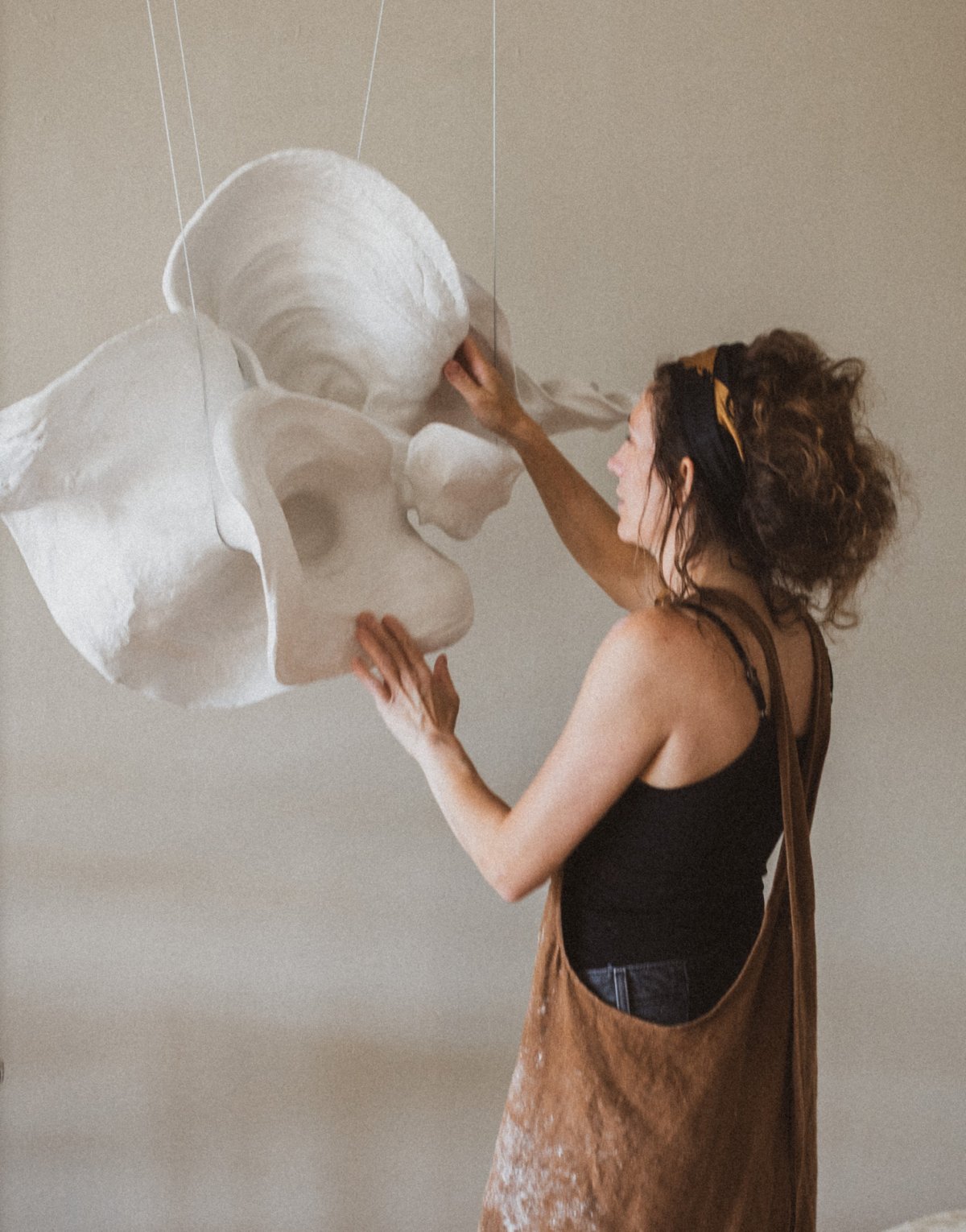
T h E W o r k
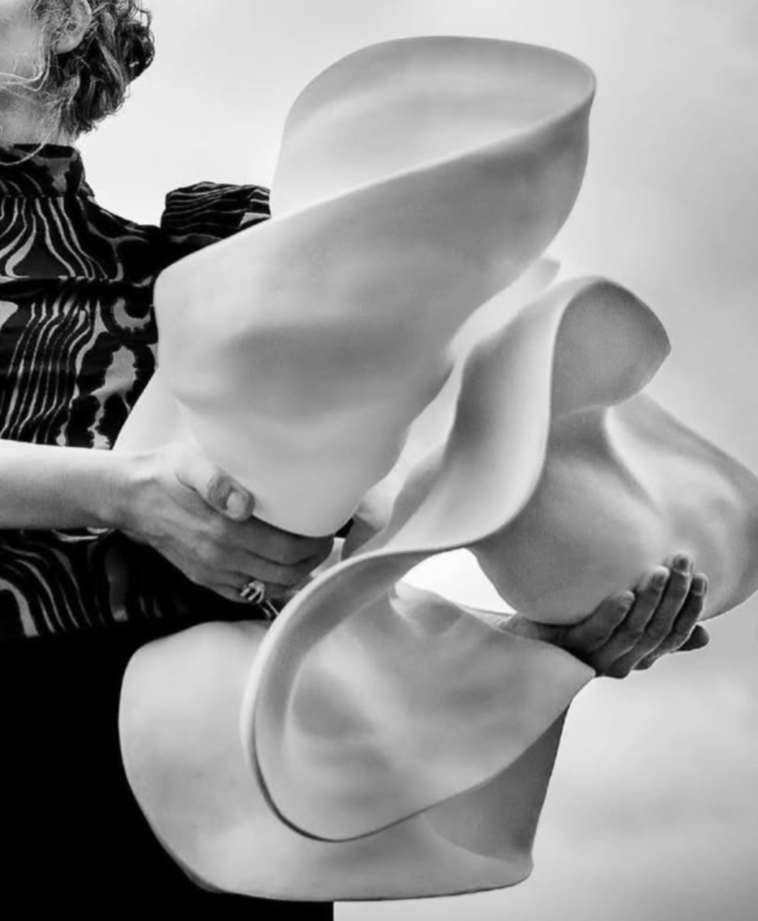
The sculptures have an abstract, organic idiom that is connected to formations in nature and the human body. My connection to the sea and water is expressed through flow and shapes that are central to my pieces. The work also has a strong connection to mythology, transformation and mysticism. The processes of the abstract and intuitive sculpture work mirrors processes in nature and gives perspective to the processes we humans face in life.The materials I work with are stoneware, plaster clay, alabaster, marble, and wood. I love the older classical techniques using hand tools, but I am constantly seeking development and often incorporate experimental approaches to bring out the expression and form that comes to me during the process. Sculptural artwork unique and hand built pieces.
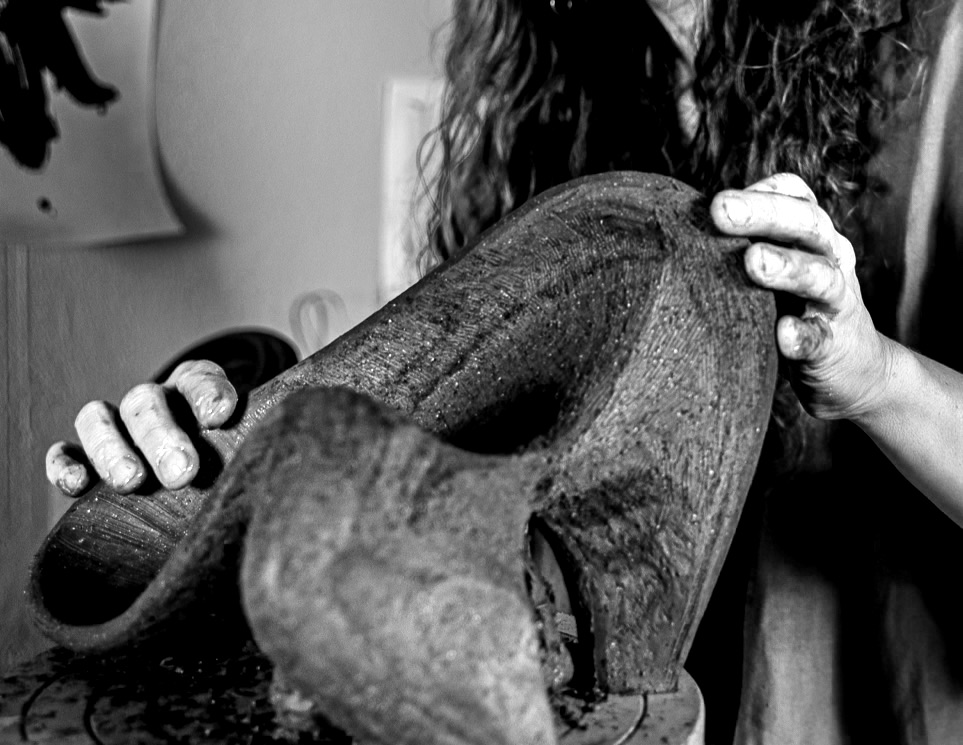
S T O N E W A R E C L A Y
A material from nature, used to create sculptures inspired by the forms of nature and other living beings. Working with this material is deeply healing and offers endless possibilities for experimentation. In combination with pigments, textures, grog, firing processes, shapes, and tools.It is one of the oldest materials to work with, yet it continuously sparks curiosity about what can be explored next. I often blend techniques, but I am always drawn back to the traditional. To the origin.
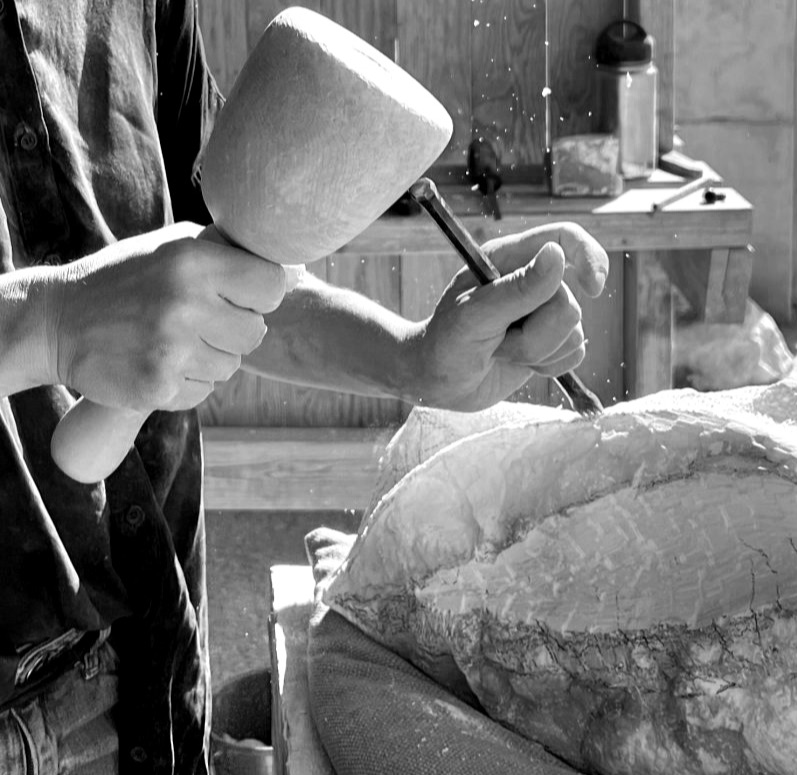
A L A B A S T E R
A remarkable mineral and a soft stone, well-suited for shaping with traditional hand tools. I sometimes preserve parts of the raw surface, formed by the earth, while other parts are shaped and polished by tools. Organic forms and a soft tactile quality meet the hardness of the stone. The contrast between smooth and rough textures creates a tactile experience. The material’s translucency subtly yet powerfully influences the expression of the sculpture. The natural veining within the stone presents a challenge, but also invites a playful interaction between nature’s form and the human hand.
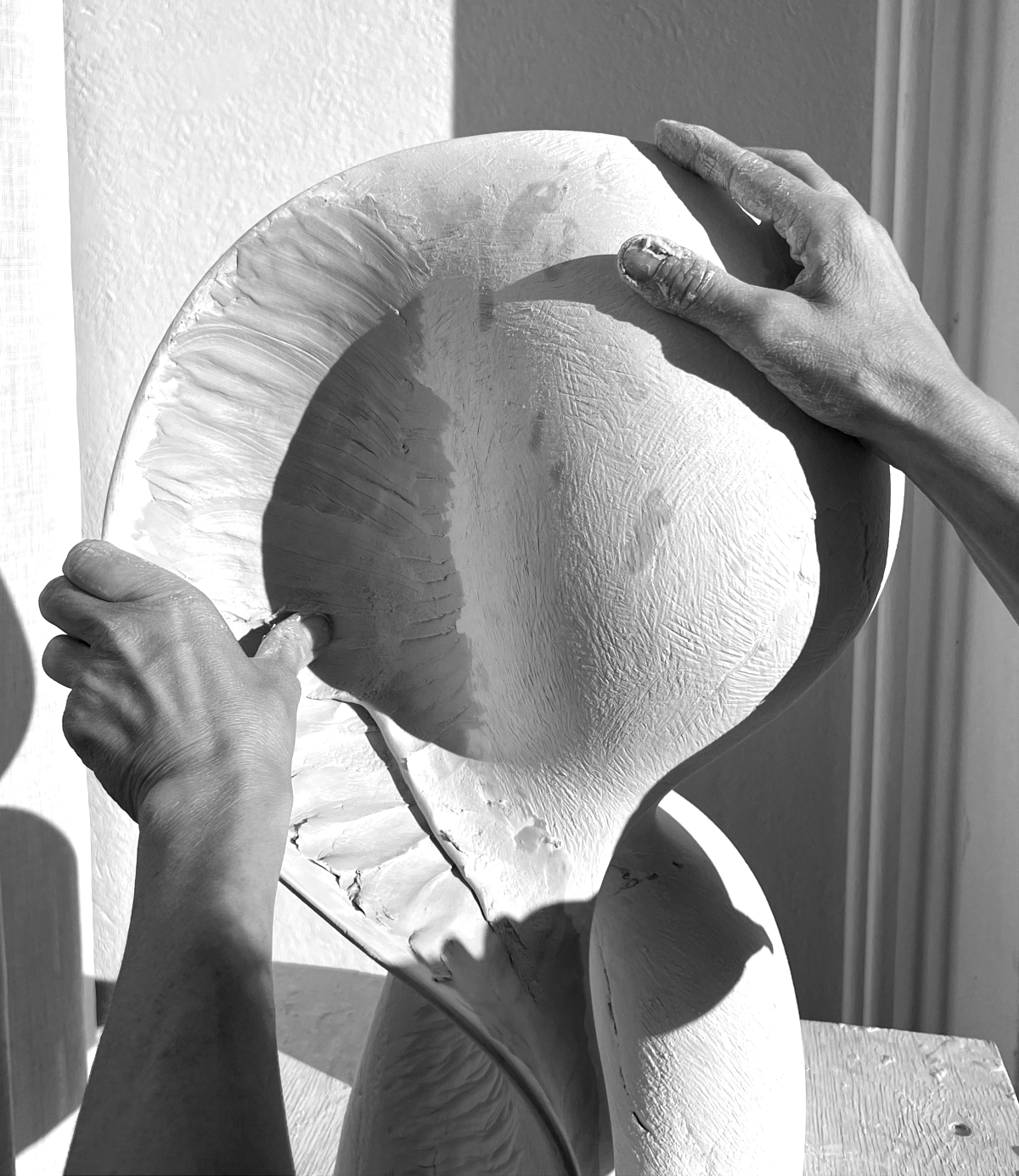
P L A S T E R C L A Y
This is where it all began, around twelve years ago, in my living room. This air-drying clay is the material I use to build sculptures in thousands of layers. I then sandblast, file by hand, saw, and build again. [NA1] It’s a long and intuitive process, where I move back and forth, searching for direction in the forms, allowing one shape to give rise to the next. The greatest challenge is finding a way to connect the movement and forms from every angle around the sculpture. Discovering the alignment and flow is the central pursuit of this work..
P A T R I C I A T R A M B E V S K I - t h e s t o r y
One day, something stirred from within me: a vague, elusive pull. I needed clay. I had to have clay. I wanted to shape something with my hands. I had hardly worked with it before, so it felt a bit ridiculous. I let it pass and thought, “It’s just another impulse. I already have a thousand projects going. I don’t need more.” But it didn’t go away. On the contrary, it grew. From a quiet whisper to an inner roar, a craving; BUY CLAY. NOW. So I started reading everything I could find about clay, different types, how to work with them. Eventually, I walked into a bookstore and bought some kind of air-drying version. And then things got out of hand. It turned into manic sculpting every free moment, everywhere. At home, the office became half studio, on trips, in the countryside. There was clay and sculpture everywhere.
What was meant to be a one-year experiment turned into twelve. A new world opened, sculpture became everything to me and took over my life. For the first time, I had found home. Through experimenting with my thoughts, my creative abilities, and all the research surrounding it, I felt like I was getting closer to the core of everything I had ever longed for. And with that, a deeper sense of meaning began to emerge.
During this period, an important person also entered my life. A mentor and teacher in sculpture who would come to mean an enormous amount to me and my work. Over the years, I have educated myself through courses with various sculptors, aiming to deepen my knowledge, learn traditional techniques, and blend them with my own approach. Meeting someone who knew everything I wanted to learn about sculpture, who carried endless experience, and who had a perspective on sculptural work that resonated so deeply with mine—but with much more calm and a technical level I could only dream of—was invaluable. The teacher taught me so much and answered all my questions with patience. She helped me through crises when I got stuck in sculpture projects, which happened now and then when I had bitten off more than I could chew, and gave me advice on how to solve it calmly and methodically, or what to consider moving forward. All my life, I had dreamed of meeting a master to learn from. She became that master to me, and I absorbed everything I possibly could. Not only technically, but also mentally, about what it truly means to work with sculpture. As she says, “Sculpture is character-building,” and I now deeply understand what she means. After a lot of hard work, several disasters, and many tears, I’ve come to realize that it requires patience, humility, and persistence. It’s about struggling with doubt, getting lost in dead ends, and then finding your way out again. Sometimes with a new direction, sometimes simply to keep going. Moments of euphoria can quickly turn into complete loss of direction and connection to the work.